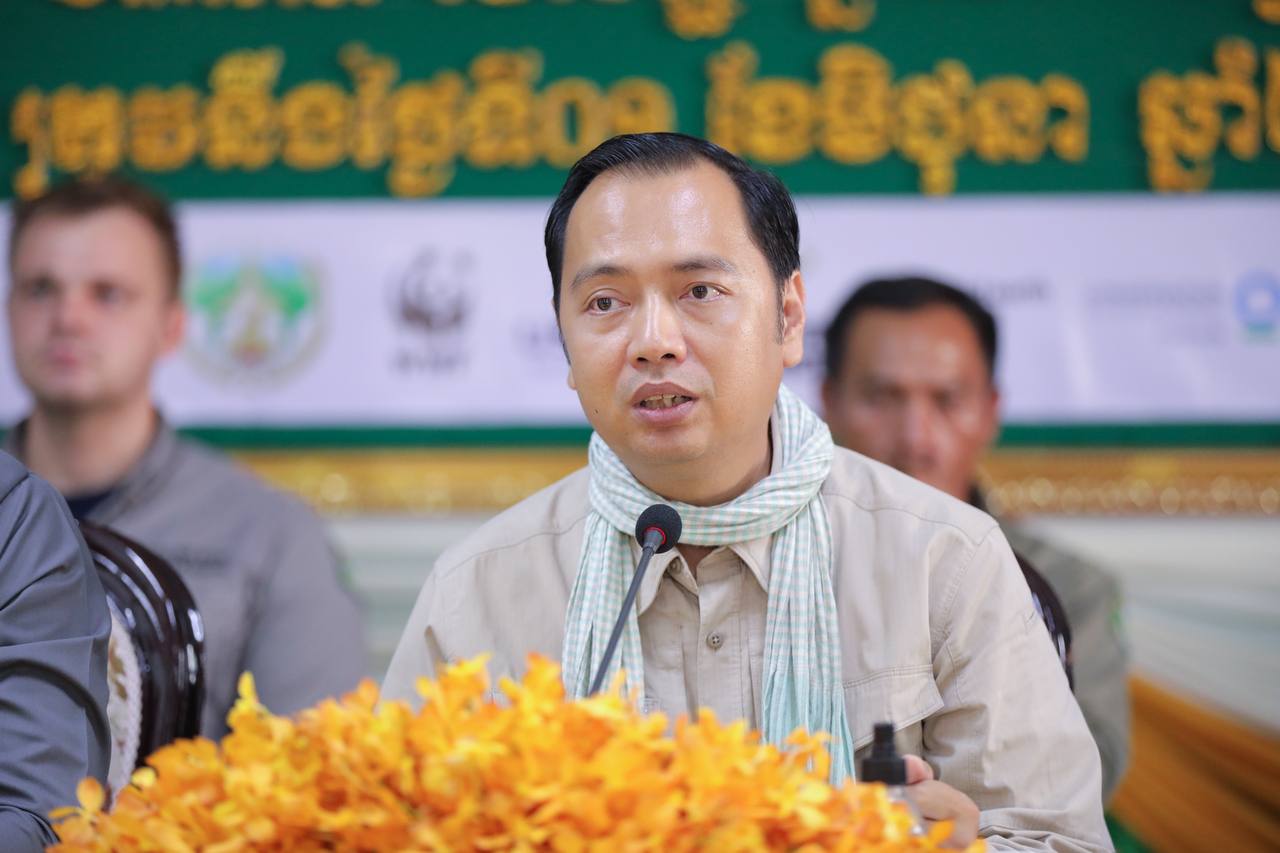







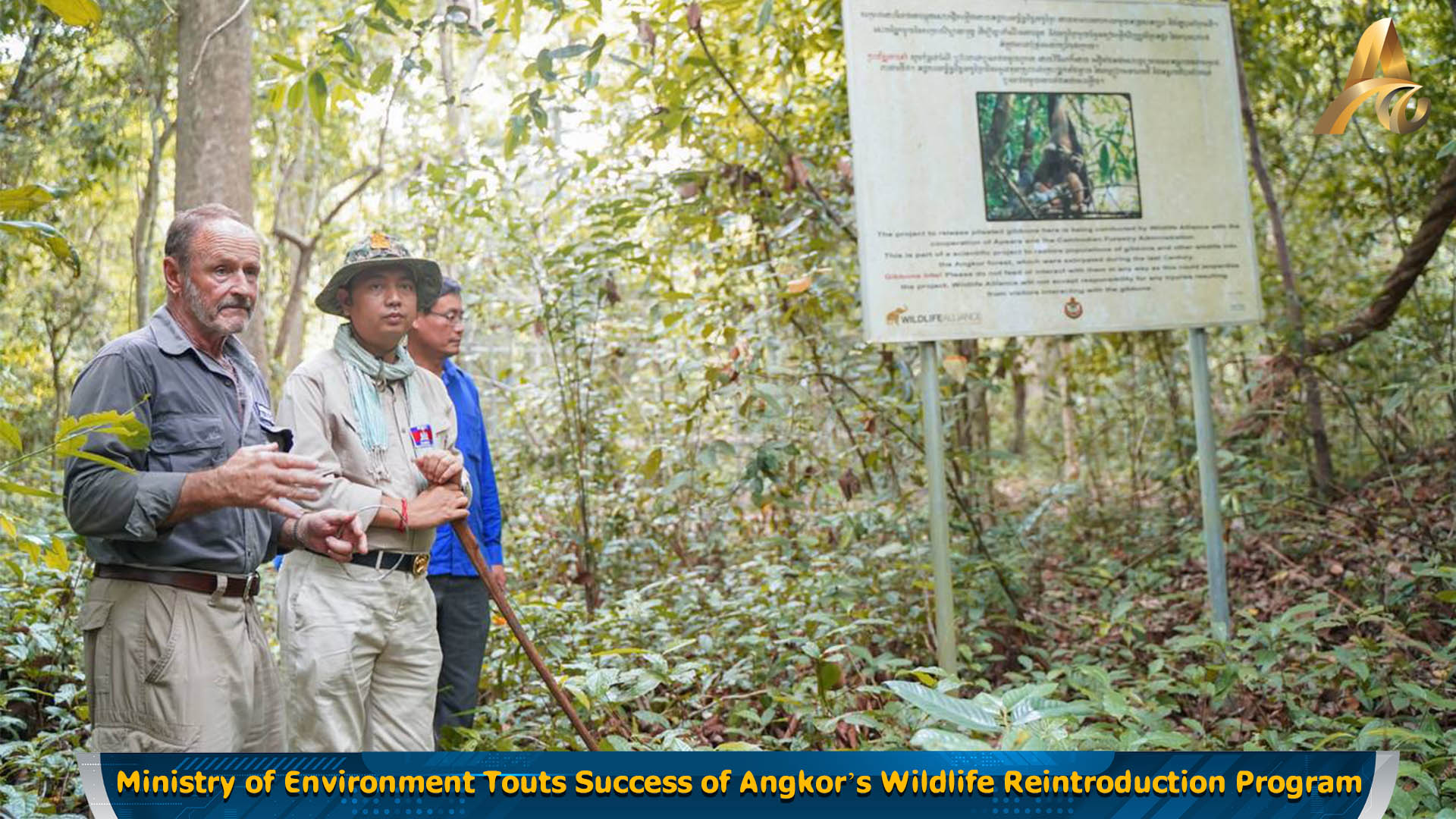








SIEM REAP: Wildlife protection in the Angkor area is a major priority for ecotourists and conservationists alike. This week, Ministry of Environment spokesperson Net Pheaktra toured journalists through the park and praised join efforts that are leading to more biodiversity within the surrounding forests.
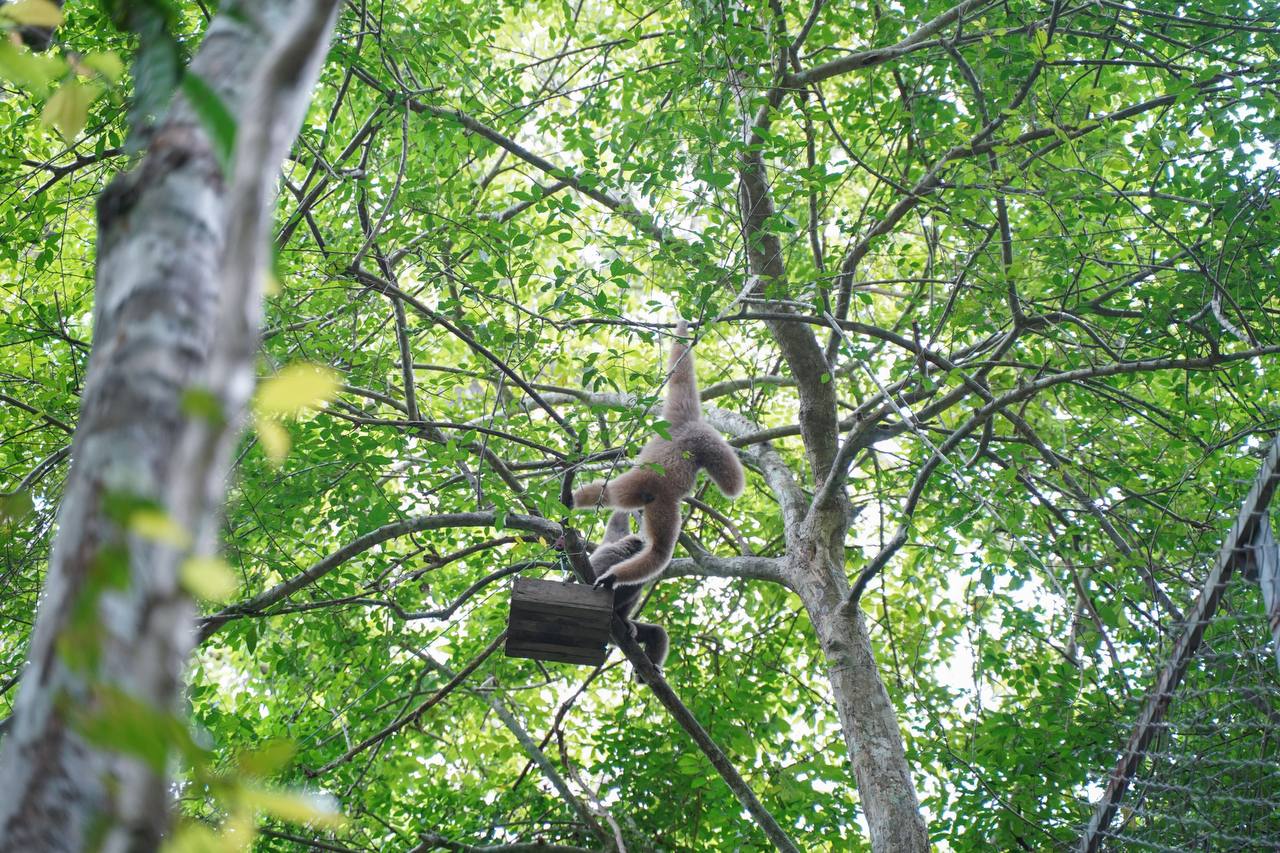
He noted that the APSARA National Authority paired with the Wildlife Alliance over the last ten years to release four pairs of endangered pileated gibbons, eight in total, in the forest area of Angkor National Park. The pairs bore seven additional gibbons, bringing the total to 15, which he counts as a success for the project.
He was sure to note that it is only through Cambodia’s current state of peace that ministries and organizations can focus on the conservation and protection of wildlife. He then credited the APSARA National Authority management and the park rangers for maintaining security in the area, which allowed for the safe release of wildlife into the park.
He stressed that the next task is to strengthen and protect wildlife sanctuaries so that they can reproduce. To that end, the Ministry of Environment launched a Zero-Trap Campaign last year to educate the public about the harmful impact of trapping and trading bush meat.
APSARA’s Deputy Director for the Department of Water Management, Forests and Infrastructure, Choura Dina, said that the recent reintroduction of wildlife into the park adds to the area’s tourism value making it not only a historic destination, but one where visitors can view wildlife as well.
Angkor National Park was the first national park in Southeast Asia, established in 1925. Currently, the forest in Angkor is home to many species of wildlife such as pileated gibbons, silver langurs, red muntjacs, meerkats, leopards, hornbills, lizards, peacocks and otters.